
This flight of capital began in early August due to risk-aversion created first by rising geopolitical tensions due to North Korean aggression and second by the US Fed's decision to shrink its balance sheet

Indian benchmark indices may witness bouts of volatility this week as traders roll over positions in the derivative segment on expiry of near-month contracts, say experts.

In cross-currency trades, the rupee firmed up further against the pound sterling

The steep decline in commodity prices has reversed.
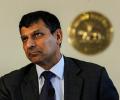
RBI Governor cautioned against more volatility.

Rupee will weaken against the dollar in next 12 months, says Reuters poll.

India is likely to attract increasing notice from global investors.

Engineering major BHEL rebounded from its day's lows to end around 1% higher.

The central bank operationalised these special windows on September 4 to prop the rupee which had fallen close to 30 per cent between April and August.

Tata Motors was the biggest gainer in the Sensex pack, rallying 2.94 per cent. It was followed by Vedanta, Bajaj Finance, Sun Pharma, ONGC, ICICI Bank, Bajaj Auto, Tata Steel, RIL, HDFC duo, L&T and SBI, rising up to 2.78 per cent.

Japan's Nikkei fell 0.5% and South Korea's Kospi lost 1.3%.

Joydeep Ghosh takes stock of personal finances after the life-altering surprises of 2016.

India has always been a good bet in relative terms during crises/turbulent times in emerging markets (EMs).

Hans Goetti, Director of Citigroup, says that India is not cheap, but attractive to long-term investors and has a favourable composition of imports. \n

'Everyone is still trying to understand the quantum of impact demonetisation will have on the economy.'

India's current account deficit narrowed sharply to just $300 million

'Investors hate uncertainty and the demonetisation move certainly creates that.'

Fresh demand for the US currency from importers and banks alongside sustained capital outflows by foreign funds weighed on the local unit

They have put in $14 billion so far in 2014 but this could get slower if the US Fed raises rates; however, there are expectations on compensatory flows.

A strengthening dollar, rising interest rates, tightening liquidity and a surge in oil prices - all are combining to create a toxic atmosphere for EM assets, says Akash Prakash.
.jpg)
The newly-appointed Governor Raghuram Rajan said on Wednesday Reserve Bank of India will offer a window to banks to swap the fresh FCNR-B dollar funds, mobilised for a minimum tenor of three years and over, at a fixed rate of 3.5 per cent per annum. According to Bank of America Merrill Lynch, "the move should fetch $8-10 billion", adding that the move would help in shifting rupee risks away from NRIs at a time of extreme volatility.

At a time when the whole world is going ga-ga over stocks and debt is too easy to borrow, do not forget gold, says Anil Rego.

This is the highest closing level since May 11, 2016 when the rupee had finished at 66.56

A massive outflows of foreign funds on the back of stricter participatory notes and renewed possibility of Fed lifting US interest rates largely impacted the domestic unit.
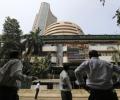
After turning net buyers for the fifth straight month till June, foreign portfolio investors (FPIs) withdrew a net of Rs 11,743 crore ($1.7 billion) in July. This was their highest outflow since October 2018.

The rupee recovered by 11 paise to trade at 60.84 against the US dollar in early trade today on selling of the American currency by banks and exporters.

The surge is a stark turnaround from 2013 when the country's current account gap hit a record high due to outflows on expectations the US Fed would rein in its stimulus programme

The Indian stock market had rallied through the first fortnight of October but it gave back the bulk of its gains in the second half.

Rajan also said it's a problem of collective action and not a problem of industrial nations or emerging markets

Market recovery on the cards in 2014 as investors are likely to chase higher yields

'It is unlikely that foreign portfolio investors (FPIs) might increase their India allocation, given the overweight status for most FPIs.' 'Given the commentary from the Republican Party, an anti-imports approach means money will not flow out of the US.'

The dollar moved higher, while prices for US government debt fell, as traders ramped up bets the Federal Reserve would raise interest rates in March

The rupee is likely to strengthen to 60-61 level by this fiscal-end on expectations of improvement in current account deficit (CAD) and higher inflows from overseas investors.

Bearish greenback overseas and robust capital inflows predominantly supported the domestic currency

Falling sales since demonetisation has alarmed CEOs, who want to save cash till the economy recovers.

The Asian markets are largely trading in the green, taking heart from a positive close on Wall Street.

Since mid-July, the RBI has taken steps to tighten cash conditions, which have failed to support the rupee but sent bond yields surging, posing a fresh threat to the already cooling economy.

If new goals have emerged, this is the time to make fresh investments.

The Survey also said that the borrowings by banks have increased significantly.

Since its peak, the S&P BSE Sensex has dropped nearly 3,000 points.
 © 2026 Rediff.com - Advertise with us - Disclaimer - Privacy Policy - Sitemap - Feedback - About us - Terms of use - Grievances